
 https://www.synyo.com/wp-content/uploads/SYNYO-NEWS-featured-image-NEW01009401EN.png
400
459
leo
https://www.synyo.com/wp-content/uploads/2017/09/synyo-logo.png
leo2026-02-01 13:41:502026-02-03 10:18:50GreenEsteem: Project for sustainable Nature-Based Solutions through Co-Creation Launched
https://www.synyo.com/wp-content/uploads/SYNYO-NEWS-featured-image-NEW01009401EN.png
400
459
leo
https://www.synyo.com/wp-content/uploads/2017/09/synyo-logo.png
leo2026-02-01 13:41:502026-02-03 10:18:50GreenEsteem: Project for sustainable Nature-Based Solutions through Co-Creation LaunchedReIncluGen
ReIncluGen: Participatory Action Research. An Evaluation of CSO Practices on Empowerment and Inclusion.
Within the past half year, SYNYO and the other academic partners within the ReIncluGen consortium, have conducted participatory action research. This entailed the selection of three or more civil society organisations (CSOs) per country, as well as the selection of three or more practices that promote gender empowerment and inclusion, especially among migrant women. These practices were then jointly discussed in several sessions, with the aim of evaluating their respective impact and derive potential improvements.
The case of Vienna, Austria
The case of implementing participatory action research in Austria was special, as on the one hand, SYNYO decided to collaborate with CSOs we had previously already worked with and, on the other hand, SYNYO took over the role as ‘critical friend’ – which was originally foreseen for another CSO. The reason for this decision was the concern of participating CSOs that they would not open up and engage critically enough with their own practices in the presence of other external colleagues for fear of being judged. Therefore, in Austria the ‘critical friend’ role was played by SYNYO as external to the whole field, but at the same time, familiar with the project.
The research
During the evaluation process, CSOs assessed seven distinct practices: German language courses, German alphabetisation courses, emergency housing (with a particular focus on the admission process), social and legal counselling, and social accompaniment. Over the course of several months, four focus group discussions (FGDs) were conducted with each participating CSO. These discussions allowed the CSOs to link their overall work and context to the specific challenges they aim to address and the practices they implement to tackle them. Participants in each FGD included team members performing various tasks and holding diverse positions within the organisational hierarchy. This structure fostered broader discussions and brought forth multiple perspectives. The presence of the SYNYO team further encouraged participants to reflect on their practices and explain them step-by-step to an external audience, which, in some cases, helped clarify and illuminate certain processes. The findings will be comparatively analysed in a cross-country report by the University of Antwerp as part of the final deliverable. Additionally, best practice examples from project organisations and beyond are made available on QUWA.
The findings
Overall, the CSOs identified similar social challenges and problems, they seek to minimise with the practices and activities they offer. While one CSO defined the social problem as “disadvantages in society and discrimination”, another CSO spoke of gender-based violence (GBV) in a broader sense, stretching from physical violence to psychological but also societal and structural forms of violence, that can also be understood as gender-based discrimination. The last CSO also identified GBV as their focal social problem, with a narrower focus on physical and psychological violence within family structures, as well as potentially forced marriage and abduction.
The target groups for whom the practices and activities are tailored are women and girls with a migration background. Nonetheless, the age group targeted depends more strongly on the activity and practice, as does their country of origin and whether or not they are first- or second-generation migrants.
When evaluating the impact of the practices, more positive than negative ones were identified, however the impacts evaluated are mainly short-term as most projects and activities are inherently designed for a limited time frame. Thus, upon completion of the practice or activity, may it be a language course or accommodation in the emergency housing, the client is expected to have been empowered at least to the point that she does not need to utilise this practice or activity further. To respect their privacy, no evaluation of the practice has followed up on clients throughout several years after having utilised these practices.
Lastly, common themes in regard to potential improvements of the respective practices and activities, were a lack of funding and a wish to be able to provide better services to more clients in need and lastly, to extend the services offered. The staff members of the participating CSOs stated that neither financial means, nor personnel capacity or the project duration are sufficient. All of these aspects depend strongly on the funding cycle and funding schemes which were heavily criticised. Funding cycles operate on an annual basis, thus staff members need to apply to funding agencies once a year taking time from their actual positions and off the practices and activities. Despite a practice having been continuously funded throughout the past years, CSOs can never be fully sure to receive funding for the next year.
Upcoming events
The traveling photo exhibition, which was developed as part of the ReIncluGen project, is coming to Vienna on January, 22nd 2025. It will take place in the Brunnenpassage from 6-10pm and is open to the public. This event enables women to speak about themselves and their stories through the art of photography. Additionally, the evening will be accompanied by music from the Emilia Miran Band.
Links
https://www.uantwerpen.be/en/projects/reinclugen/news-activities/
Keywords
migration, women, gender equality, CSO, evaluation research
https://www.synyo.com/wp-content/uploads/SYNYO-NEWS-featured-image-NEW01009401EN.png
400
459
leo
https://www.synyo.com/wp-content/uploads/2017/09/synyo-logo.png
leo2026-02-01 13:41:502026-02-03 10:18:50GreenEsteem: Project for sustainable Nature-Based Solutions through Co-Creation Launched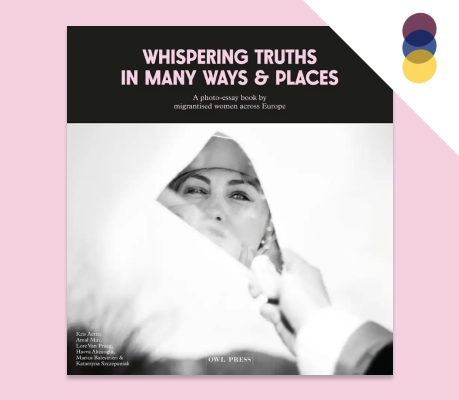 https://www.synyo.com/wp-content/uploads/SYNYO-NEWS-featured-image-Press-Release.png
400
459
leo
https://www.synyo.com/wp-content/uploads/2017/09/synyo-logo.png
leo2025-12-15 09:55:062025-12-18 09:55:28ReIncluGen: European Research Project Maps New Ways to Strengthen Support for Migrant Women
https://www.synyo.com/wp-content/uploads/SYNYO-NEWS-featured-image-Press-Release.png
400
459
leo
https://www.synyo.com/wp-content/uploads/2017/09/synyo-logo.png
leo2025-12-15 09:55:062025-12-18 09:55:28ReIncluGen: European Research Project Maps New Ways to Strengthen Support for Migrant Women https://www.synyo.com/wp-content/uploads/SYNYO-NEWS-featured-image-NEW01009002EN.png
400
459
leo
https://www.synyo.com/wp-content/uploads/2017/09/synyo-logo.png
leo2025-08-01 13:48:032025-10-20 13:50:29METEOR Programme development and work package and outreach updates
https://www.synyo.com/wp-content/uploads/SYNYO-NEWS-featured-image-NEW01009002EN.png
400
459
leo
https://www.synyo.com/wp-content/uploads/2017/09/synyo-logo.png
leo2025-08-01 13:48:032025-10-20 13:50:29METEOR Programme development and work package and outreach updatesLatest News
 GreenEsteem: Project for sustainable Nature-Based Solutions through Co-Creation LaunchedFebruary 1, 2026 - 1:41 pm
 ReIncluGen: European Research Project Maps New Ways to Strengthen Support for Migrant WomenDecember 15, 2025 - 9:55 am
 METEOR Programme development and work package and outreach updatesAugust 1, 2025 - 1:48 pm

