
 https://www.synyo.com/wp-content/uploads/SYNYO-NEWS-featured-image-01009402EN.png
400
459
leo
https://www.synyo.com/wp-content/uploads/2017/09/synyo-logo.png
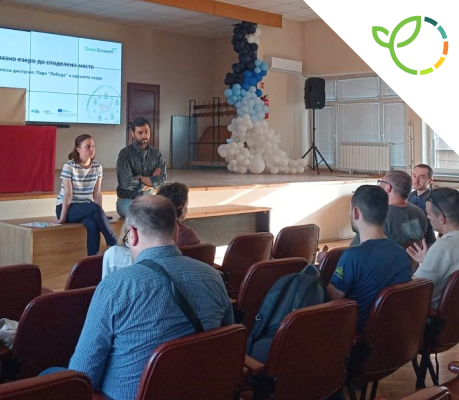
leo2026-09-01 09:46:202026-09-02 09:46:46GreenEsteem: Project Establishes Expert Support Groups to Drive Sustainable Urban Greening
https://www.synyo.com/wp-content/uploads/SYNYO-NEWS-featured-image-01009402EN.png
400
459
leo
https://www.synyo.com/wp-content/uploads/2017/09/synyo-logo.png
leo2026-09-01 09:46:202026-09-02 09:46:46GreenEsteem: Project Establishes Expert Support Groups to Drive Sustainable Urban GreeningCVDLINK

CVDLINK: Development of the decentralised data repository and integrated prototype infrastructure
A comprehensive end-to-end framework was established during the technical consortium meeting in San Sebastian to coordinate the deployment of a federated medical data platform. Technical developers, data providers, and system architects collaborated to review advanced digital repository designs aimed at enhancing cardiovascular health risk assessment. The deployment of virtual integration workflows was prioritized to accelerate data synchronization, automated format transformations, and security auditing mechanism verification across multiple European medical research layers. These activities ensure that a validated clinical infrastructure is successfully completed on schedule prior to formal periodic evaluation phases.
The structural architecture of the federated system requires rigorous technical coordination to ensure seamless interoperability between separate medical databases. During the operational planning sessions, a decentralised layout was finalized to govern data interaction protocols between the primary cloud coordinator and regional hospital infrastructure layers. A federative mechanism to access data based on roles and ownership was successfully put in place, allowing authorized technical developers to execute secure connections via virtual private networks. Connection credentials and detailed documentation guiding the primary access pathways were structured inside shared project repositories to facilitate rapid testing routines.
Decentralised database management is achieved by maintaining all sensitive raw information locally at individual clinical provider sites. Only the metadata catalogue remains fully accessible to any system user during query execution workflows, ensuring that actual values are never exposed or transferred to the central node. The metadata catalogue refers strictly to descriptive information about the datasets, such as variable names, structures, formats, and access conditions. Information flows are designed so that the common data model governs internal processing tasks, such as artificial intelligence model training, the generation of balanced datasets, and semi-automated annotation. While non-identifiable clinical variables are included in the harmonized representation shared with the federated repository, this happens only after all sensitive identifiers have been completely removed or pseudonymised by the respective data provider.
The implementation of data upload, sharing, and access mechanisms is supported by an underlying infrastructure created using Elastic Stack technologies, including Elasticsearch and Logstash, paired with advanced graph database structures. To ensure that technical developers can test their applications effectively, specific virtual teams were established to focus on data access, data integration, service design, and end-to-end prototyping. The data access virtual team is tasked with provisioning mock-up files and secure real data environments containing specialized imaging and sequence datasets. Concurrently, the common data model virtual team oversees the data integration processes, transforming distinct source files into a unified representation that allows cross-border analysis without compromising security.
Quality control is maintained via a specialized data quality check tool engineered to evaluate homogenization, noise levels, and information completeness. For biological signals, automated software metrics are calculated to estimate signal-to-noise ratios, identify the presence of specific cardiac waveforms, and detect unwanted artifacts. For diagnostic imaging files, standard format protocols are verified, while sequence quality tools are applied to extract metrics from genetic datasets. Evaluation parameters are systematically embedded within the application layers to produce clear data maturity scores based on international findable, accessible, interoperable, and reusable principles. Furthermore, developed applications are configured for official submission to the specialized tool registry to generate standardized artificial intelligence passports.
The design of user-facing components includes a dedicated user interface layer that conforms strictly to predefined role descriptions and healthcare professional requirements. Lovable and other advanced design utilities are utilized to construct interface drafts that support rapid user feedback collection. Distinct system privileges are granted depending on user categories, separating basic health professionals, research users, and system administrators. Health professionals are permitted to view results, over-rule automated outputs, and report malfunctions, whereas research users are granted expanded privileges to train models, initiate localized processing, and query the central metadata index. Complete administrative privileges are reserved for troubleshooting network and user management operations.
System security structures have been thoroughly mapped to align with regional cybersecurity legislation, including the network and information systems directive and the artificial intelligence act. Security protocols incorporate multi-factor authentication, robust cryptography, incident handling procedures, and clear vulnerability disclosure policies to protect digital and physical assets. Programmatic interaction with the distributed database infrastructure is handled via secure representational state transfer application programming interfaces. These interfaces facilitate metadata access, synchronization verification, and unified data search routines. Bi-weekly technical task force sessions have been established to replace fragmented updates, ensuring that software code is tightly managed via version control systems to meet the core implementation milestones. .
Links
Keywords
Cardiovascular diseases, Personalised medicine, Data-driven interventions, AI Tools, Sustainable project outcomes, Exploitable solutions
https://www.synyo.com/wp-content/uploads/SYNYO-NEWS-featured-image-01009402EN.png
400
459
leo
https://www.synyo.com/wp-content/uploads/2017/09/synyo-logo.png
leo2026-09-01 09:46:202026-09-02 09:46:46GreenEsteem: Project Establishes Expert Support Groups to Drive Sustainable Urban Greening https://www.synyo.com/wp-content/uploads/SYNYO-NEWS-featured-image-NEW01009103EN.png
400
459
leo
https://www.synyo.com/wp-content/uploads/2017/09/synyo-logo.png
leo2026-03-01 09:54:082026-09-03 09:54:27VIRTUOUS simulation enhances security awareness for religious leaders in Rome
https://www.synyo.com/wp-content/uploads/SYNYO-NEWS-featured-image-NEW01009103EN.png
400
459
leo
https://www.synyo.com/wp-content/uploads/2017/09/synyo-logo.png
leo2026-03-01 09:54:082026-09-03 09:54:27VIRTUOUS simulation enhances security awareness for religious leaders in Rome https://www.synyo.com/wp-content/uploads/SYNYO-NEWS-featured-image-NEW01009401EN.png
400
459
leo
https://www.synyo.com/wp-content/uploads/2017/09/synyo-logo.png
leo2026-02-01 13:41:502026-07-28 15:12:04GreenEsteem: Project for sustainable Nature-Based Solutions through Co-Creation Launched
https://www.synyo.com/wp-content/uploads/SYNYO-NEWS-featured-image-NEW01009401EN.png
400
459
leo
https://www.synyo.com/wp-content/uploads/2017/09/synyo-logo.png
leo2026-02-01 13:41:502026-07-28 15:12:04GreenEsteem: Project for sustainable Nature-Based Solutions through Co-Creation LaunchedLatest News
 GreenEsteem: Project Establishes Expert Support Groups to Drive Sustainable Urban GreeningSeptember 1, 2026 - 9:46 am
 VIRTUOUS simulation enhances security awareness for religious leaders in RomeMarch 1, 2026 - 9:54 am
 GreenEsteem: Project for sustainable Nature-Based Solutions through Co-Creation LaunchedFebruary 1, 2026 - 1:41 pm

