
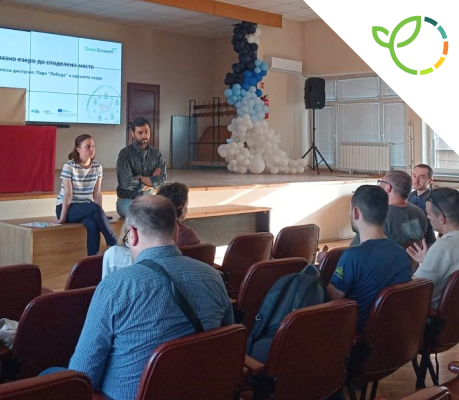
 https://www.synyo.com/wp-content/uploads/SYNYO-NEWS-featured-image-01009402EN.png
400
459
leo
https://www.synyo.com/wp-content/uploads/2017/09/synyo-logo.png
leo2026-09-01 09:46:202026-09-02 09:46:46GreenEsteem: Project Establishes Expert Support Groups to Drive Sustainable Urban Greening
https://www.synyo.com/wp-content/uploads/SYNYO-NEWS-featured-image-01009402EN.png
400
459
leo
https://www.synyo.com/wp-content/uploads/2017/09/synyo-logo.png
leo2026-09-01 09:46:202026-09-02 09:46:46GreenEsteem: Project Establishes Expert Support Groups to Drive Sustainable Urban GreeningCVDLINK
CVDLINK: Advanced federated paradigm and end-to-end prototype development for health risk assessment
A sophisticated end-to-end prototype was finalised during a high-level technical assembly in Bucharest to establish a secure repository for cardiovascular data integration. The platform was engineered by leading European technical institutes to evaluate diagnosis, prognosis, and risk assessment paradigms without exposing sensitive patient details. This breakthrough enables cross-border medical analytics while ensuring rigorous compliance with emerging regional healthcare digital frameworks. Operational validation is scheduled across selected clinical nodes to initiate multi-centre test routines.
The implementation of decentralized information structures across complex network medical platforms requires strict data isolation protocols. In the context of the CVDLINK project, a robust architecture has been engineered to support automated feature transformation models. This layout coordinates clinical activities across secondary environments known as subordinate or seed nodes, while a primary administrative terminal serves as the central node. The structural architecture of the system relies on a decentralized layout where a central coordinator orchestrates interactions with sub-level server environments. Local client applications are deployed at hospital infrastructure layers to maintain absolute data sovereignty. Information is retained entirely on-premise or within approved institutional clouds, preventing raw medical histories from being transmitted externally. Global search functionality is restricted to metadata exposure and model parameters generated during iterative processing runs.
A web-based interface has been delivered to streamline data categorization into standardised repository directories. For advanced deployments, integration is achieved through programmatic software components using representation state transfer protocols. The onboarding workflow is executed via five consecutive phases: local server setup and source ingestion, deployment and execution of containerised application layers, verification of analytical features against internal sample groups, reconfiguration to read unified formats for indexing and metadata replication, and multi-node system synchronization across the ecosystem. Data normalization is governed by an extended common data model based on the observational medical outcomes partnership standard. Extraction, transformation, and loading pipelines have been structured to process electro-medical waves, diagnostic imaging file strings, and complex genetic sequence files.
The system processes clinical inputs via dedicated domain pathways: electronic health record genomics, biological signals, and angiographic track pathways. Pre-trained artificial intelligence mechanisms are embedded within the framework to evaluate general applicability across different heart conditions, including sudden cardiac death prediction and atrial fibrillation detection. These computational pipelines run securely inside specific container environments, ensuring that patient data undergoes localized transformation without external migration. The user-facing visualization features include specialized medical image viewers designed to deliver granular interpretations of radiological files directly to clinical end-users. System diagnostics and early validation checks are performed regularly to ensure model reproducibility prior to broad testing cycles.
Extensive technical mapping was undertaken to guarantee structural alignment with the European Health Data Space and the Open Science Cloud. System modular elements are distributed through persistent open infrastructure portals to support replication. The extended model schemas are hosted via shared version control networks and linked to metadata registries. Quality verification routines for genomic data arrays are distributed as containerised images via archiving databases. Semi-automated annotation software modules are made accessible for clinical research groups via specific tool repositories. Analytical artificial intelligence networks are packaged to operate smoothly via European marketplace portals, allowing foreign sites to utilize specific tools locally.
Sustained system validation is guaranteed through strict compliance protocols. System designs incorporate strict compliance configurations, addressing data verification rules, permission validation logs, and history tracking systems as dictated by current artificial intelligence regulations. Long-term archive properties are calibrated to meet ten-year documentation maintenance mandates. Collaborative working groups meet on a bi-weekly schedule to refine processing pathways, accelerate clinical site readiness, and evaluate usability feedback collected via user interface questionnaires. These interconnected validation routines ensure the system is production-ready prior to official multicentre study phases.
Links
Keywords
Cardiovascular diseases, Personalised medicine, Data-driven interventions, AI Tools, Sustainable project outcomes, Exploitable solutions
https://www.synyo.com/wp-content/uploads/SYNYO-NEWS-featured-image-01009402EN.png
400
459
leo
https://www.synyo.com/wp-content/uploads/2017/09/synyo-logo.png
leo2026-09-01 09:46:202026-09-02 09:46:46GreenEsteem: Project Establishes Expert Support Groups to Drive Sustainable Urban Greening https://www.synyo.com/wp-content/uploads/SYNYO-NEWS-featured-image-NEW01009401EN.png
400
459
leo
https://www.synyo.com/wp-content/uploads/2017/09/synyo-logo.png
leo2026-02-01 13:41:502026-07-28 15:12:04GreenEsteem: Project for sustainable Nature-Based Solutions through Co-Creation Launched
https://www.synyo.com/wp-content/uploads/SYNYO-NEWS-featured-image-NEW01009401EN.png
400
459
leo
https://www.synyo.com/wp-content/uploads/2017/09/synyo-logo.png
leo2026-02-01 13:41:502026-07-28 15:12:04GreenEsteem: Project for sustainable Nature-Based Solutions through Co-Creation Launched https://www.synyo.com/wp-content/uploads/SYNYO-NEWS-featured-image-NEW01008605EN.png
400
459
leo
https://www.synyo.com/wp-content/uploads/2017/09/synyo-logo.png
leo2026-01-01 11:50:142026-09-02 11:50:29CVDLINK: Advanced federated paradigm and end-to-end prototype development for health risk assessment
https://www.synyo.com/wp-content/uploads/SYNYO-NEWS-featured-image-NEW01008605EN.png
400
459
leo
https://www.synyo.com/wp-content/uploads/2017/09/synyo-logo.png
leo2026-01-01 11:50:142026-09-02 11:50:29CVDLINK: Advanced federated paradigm and end-to-end prototype development for health risk assessmentLatest News
 GreenEsteem: Project Establishes Expert Support Groups to Drive Sustainable Urban GreeningSeptember 1, 2026 - 9:46 am
 GreenEsteem: Project for sustainable Nature-Based Solutions through Co-Creation LaunchedFebruary 1, 2026 - 1:41 pm
 CVDLINK: Advanced federated paradigm and end-to-end prototype development for health risk assessmentJanuary 1, 2026 - 11:50 am

